

Last Updated: October 24, 2026
Quick Summary
Clean muscle recovery supplements are worth it if you prioritize training consistency and performance, as they deliver transparent doses of protein, creatine, and amino acids that support muscle adaptation. Quality matters more than quantity, look for exact ingredient amounts, minimal fillers, third-party testing, and cGMP manufacturing to ensure clean muscle recovery supplements actually contain what the label promises.
- Protein powder should provide 20-30 grams per serving to support muscle protein synthesis during the recovery window.
- Creatine monohydrate at 3-5 grams daily increases muscle energy for high-intensity work and training volume.
- Third-party testing from NSF, USP, or Informed Sport verifies label accuracy and banned-substance screening for competitive athletes.
- Avoid proprietary blends, artificial dyes, titanium dioxide, and sugar alcohols that prioritize shelf appeal over recovery.
- Start with clean protein, add creatine in month two, then amino acids if you train fasted or between meals.
Table of Contents
- What Makes a Muscle Recovery Supplement 'Clean'
- How Muscle Recovery Works and Why Supplements Matter
- Best Muscle Recovery Supplements: Protein, Creatine, and Amino Acids
- Creatine vs. Protein for Recovery: Which Do You Need First
- What to Ignore: Common Supplement Myths and Overblown Claims
- How to Verify Quality: Third-Party Testing and Label Transparency
- Building Your Clean Recovery Stack
- Frequently Asked Questions
What Makes a Muscle Recovery Supplement 'Clean'
"Clean" is not a regulated term, any brand can print it on a label. It is only as useful as the checkable criteria behind it.
1. Transparent, effective dosing. Every active ingredient is listed with its exact amount per serving. No proprietary blends, which group ingredients under a single milligram figure and hide the individual doses.
2. Minimal, purposeful excipients. Excipients, fillers, flow agents, sweeteners, colors, and flavors, should each have a job.
**3.
4. Independent third-party testing. The manufacturer should be able to show that an outside lab verified label accuracy, heavy-metal content, and, for sport, banned-substance screening.
**5.
FDA guidance on dietary supplement labeling requires manufacturers to list dietary ingredients and their amounts (except in proprietary blends) and to include allergen information consistent with the Food Allergen Labeling and Consumer Protection Act.
A practical label test: read the "Other Ingredients" line first.
How Muscle Recovery Works and Why Supplements Matter
Muscle recovery isn't passive. Hard training creates microscopic damage to muscle fibers, and your body responds by triggering protein synthesis to build new tissue stronger than before. That adaptation takes time, nutrients, and the right conditions.

The recovery window matters most in the first 2-4 hours after training, when muscles are primed to absorb amino acids.
Supplements don't replace sleep, nutrition, or training consistency, they amplify what you're already doing right. Protein, creatine, and essential amino acids support recovery and training.
Without adequate protein, your body struggles to build muscle regardless of training effort; without creatine, muscles have less energy for high-intensity work. Clean muscle recovery supplements deliver these compounds.
Best Muscle Recovery Supplements: Protein, Creatine, and Amino Acids
Three supplement categories dominate muscle recovery, addressing muscle adaptation, energy production, and protein synthesis.
Protein Powder for Muscle Recovery
Protein delivers the amino acids your body uses to build new muscle tissue. A quality protein powder provides 20-30 grams per serving, directly supporting muscle protein synthesis during the recovery window.
research on whey protein and muscle protein synthesis demonstrates that whey protein isolate triggers strong muscle adaptation when consumed post-workout. The isolate form removes most lactose and fat, leaving you with concentrated amino acids that your muscles can use immediately.
Shift8 Isolate Protein Vanilla delivers 25 grams of protein per serving with 1 gram of carbohydrates and zero added sugar. The ultra-filtered whey isolate is made with a digestive enzyme blend with protease and papain.
The Shift8 Protein Chocolate option in the 2-lb size ($68.99) offers the same clean formulation with a richer flavor.
Best for: Anyone serious about muscle growth and recovery who wants protein without the digestive complications or artificial sweeteners.
Skip if: You're looking for the cheapest protein option, clean formulations cost more because they exclude cheap fillers.
Clean Creatine for Muscle Growth
Creatine monohydrate is the most researched supplement in existence. Learn how to choose clean creatine monohydrate to ensure you're getting a product that meets the five standards of a clean supplement. It increases phosphocreatine availability in muscles, meaning more energy for high-intensity contractions, and therefore more reps, sets, and growth stimulus.
The "loading phase" myth suggests you must saturate muscles quickly.
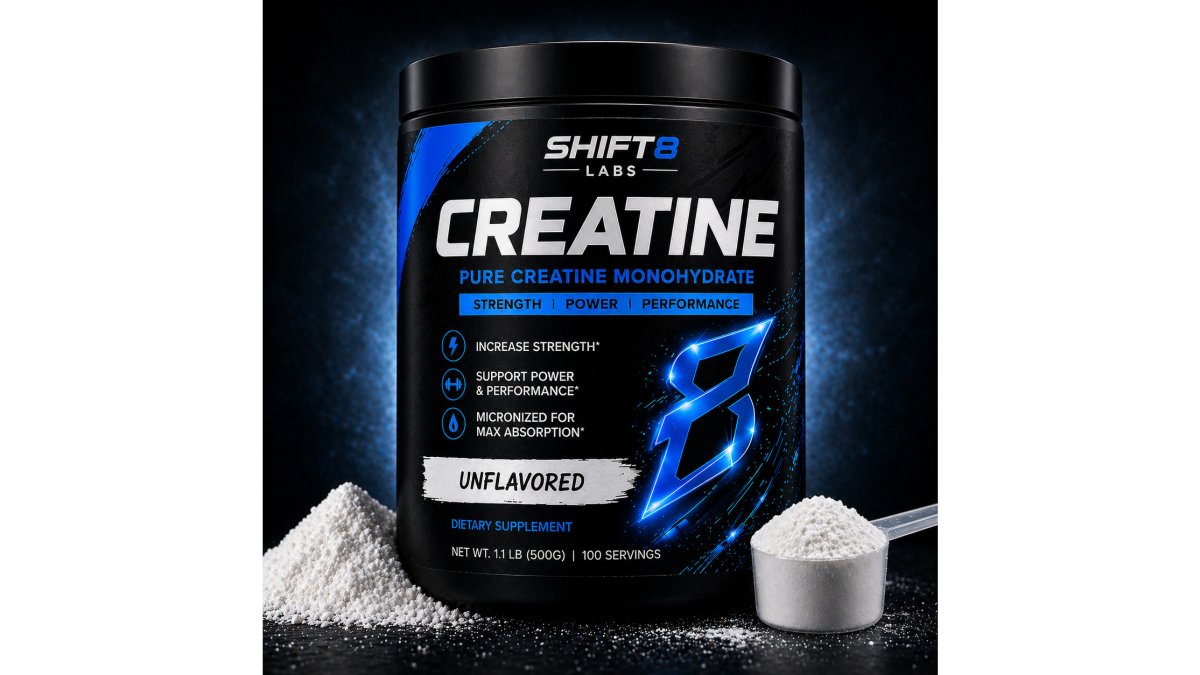
Shift8 Labs Creatine delivers 5 grams of 100% micronized creatine monohydrate per serving at $32.99. Micronization reduces particle size, improving mixing and absorption. No fillers, no loading phase required, take 5 grams daily.
Creatine is known to support muscle mass, strength, and power output.
Best for: Strength athletes, powerlifters, and anyone doing heavy resistance training who wants to maximize muscle growth and training performance.
Skip if: You're concerned about water retention, creatine pulls water into muscle cells, which some people interpret as bloating (it's not; it's intramuscular hydration).
Branched-Chain and Essential Amino Acids
Branched-chain amino acids (BCAAs) are three of the nine essential amino acids: leucine, isoleucine, and valine. Essential amino acids (EAAs) include all nine your body cannot produce on its own.
BCAAs alone can trigger protein synthesis when fasted, but EAAs provide the complete set of building blocks.
The Shift8 BCAA Powder in Lime Revival ($39.99) offers a standalone BCAA option with a 2:1:1 ratio of leucine to isoleucine to valine, emphasizing leucine, the primary trigger for muscle protein synthesis.
Shift8 Isolate Protein Vanilla 1lb →
Best for: Athletes training fasted, endurance athletes needing intra-workout amino support, or anyone wanting amino acids between meals.
Skip if: You're already consuming adequate whole food protein, supplemental amino acids add minimal benefit if your baseline nutrition is solid.
The three core supplement categories for muscle recovery each serve a distinct purpose and deliver evidence-based doses.
| Supplement | Dose per Serving | Primary Function | Best For |
|---|---|---|---|
| Protein Powder | 20-30 grams | Provides amino acids for muscle protein synthesis | Anyone serious about muscle growth and recovery |
| Creatine Monohydrate | 3-5 grams daily | Increases muscle energy for high-intensity work | Strength athletes and heavy resistance trainers |
| BCAA + EAA Powder | 5,000 mg BCAA, 7,400 mg total EAA | Complete amino acid profile for fasted training | Athletes training fasted or between meals |
Creatine vs. Protein for Recovery: Which Do You Need First
They serve different purposes and work best together.
Protein is your baseline: without adequate amino acids, your body lacks the raw material to build muscle.
Creatine amplifies what protein enables. It increases energy for high-intensity work, supporting training volume and growth stimulus. It doesn't build muscle directly, it lets you train harder, supporting the adaptations protein supports.
If budget is tight, prioritize protein. If you're already hitting protein targets through food and want to optimize training performance, add creatine. Clean protein plus clean creatine is the foundation for serious muscle recovery and growth.
What to Ignore: Common Supplement Myths and Overblown Claims
The supplement industry thrives on confusion. Here's what matters less than marketing suggests.
Timing perfection: The "anabolic window" is real but not a narrow 30-minute slot. Getting protein within that window matters; obsessing over the exact minute doesn't.
Proprietary blends: When a label lists ingredients as a "proprietary blend," it's hiding the individual amounts. You have no way to verify whether you're getting an effective dose or a trace amount. Clean supplements list every ingredient with its exact amount.
Unnecessary ingredients: Adaptogens, nootropics, and herbal extracts add cost without evidence. Stick to supplements that do one thing well.
Exotic amino acid ratios: Marketing around BCAA ratios (2:1:1 vs. 3:1:1 vs. 4:1:1) implies meaningful differences. In practice, total leucine matters more than the precise ratio; anything in the 2:1:1 to 4:1:1 range works similarly.
How to Verify Quality: Third-Party Testing and Label Transparency
A supplement label is a promise; third-party testing is the evidence it was kept. The FDA regulates supplements as food, not drugs, no pre-market approval for safety or effectiveness is required. Independent testing closes that gap.
What the major certifications actually cover.
- NSF Certified for Sport screens for more than 280 substances banned by major athletic organizations, including stimulants, anabolic agents, and masking agents, in addition to verifying label contents and contaminant limits. It is the certification most relevant to competitive athletes subject to drug testing.
- NSF/ANSI 173 verifies that the product contains the ingredients and amounts listed on the label and does not exceed contaminant limits for heavy metals, microbes, and other impurities. It is a label-and-safety check, not a banned-substance screen.
- USP Verified confirms that the product meets USP's documentary standards for identity, potency, purity, and manufacturing, and that it will dissolve or disintegrate appropriately. It also audits the manufacturing facility.
- Informed Sport and Informed Choice are banned-substance screening programs that test products and production batches for substances prohibited in sport. They are useful for athletes, but they are not a full label-accuracy audit.
USP dietary supplement verification program publishes the standards behind its seal, and NSF maintains a searchable list of certified products. A seal on the label is only meaningful if you can find the product in the certifying body's database, counterfeit and expired certifications exist.
What testing does not guarantee. A passing test covers the batch tested, not every batch produced. Treat certification as a floor, not a substitute for reading the label.
How to read a certificate of analysis (COA). A COA is the lab report behind a test.
Red flags worth taking seriously. Proprietary blends that hide doses. "Proprietary" or "research" claims with no cited studies. And marketing claims that outrun the evidence, FTC enforcement actions on supplement labeling show that unsubstantiated claims remain common.
[Link to internal resource: How to Verify Third Party Supplement Testing]
Building Your Clean Recovery Stack
A clean recovery stack doesn't require buying everything at once. Start with the fundamentals and add based on your needs and training goals.
Foundation (Month 1): Start with clean protein powder. [Link to internal resource: Shift8 Isolate Protein Vanilla 1lb] covers the amino acid foundation for muscle recovery.

Addition (Month 2): Add creatine monohydrate. [Link to internal resource: Creatine] amplifies your training performance and accelerates strength gains. Take 5 grams daily, consistently.
Optimization (Month 3+): If you train fasted or between meals, add amino acids. [Link to internal resource: Shift8 Labs BCAA + EAA Powder, Strawberry Crush] provides complete amino support during training or between meals.
Each addition serves a distinct purpose: protein alone supports recovery, protein plus creatine supports recovery and training performance, and adding amino acids supports the complete recovery picture for serious athletes.
Clean muscle recovery supplements are worth the investment if you're serious about training consistency and performance. Shift8 Labs builds products around this philosophy: purposeful dosing, transparent labeling, and ingredient quality that supports your recovery.
Frequently Asked Questions
What ingredients should I look for in a clean muscle recovery supplement?
Focus on whey protein isolate (25g+ per serving), creatine monohydrate (5g per serving), and essential amino acids (all nine types). Avoid artificial sweeteners, fillers, and proprietary blends that hide dosages. Check labels for third-party testing seals. Clean supplements list every ingredient with transparent amounts, no vague 'proprietary blend' language that prevents you from knowing what you're actually taking.
Is creatine or protein better for muscle recovery?
They serve different purposes. Protein provides amino acids your muscles need to repair and grow after training. Creatine increases strength and power output during workouts, which indirectly supports recovery by improving training quality. For best results, use both: protein post-workout for immediate repair, and creatine daily for sustained performance gains. Most athletes benefit from combining them rather than choosing one.
Do recovery supplements help reduce muscle soreness?
Protein and amino acids support muscle repair, which can reduce soreness over time, but they won't eliminate delayed-onset muscle soreness (DOMS) entirely. DOMS is a normal part of training adaptation. Adequate protein intake, proper hydration, and consistent training reduce soreness more effectively than any single supplement. Recovery supplements work best as part of a complete routine including sleep, nutrition, and smart training progression.
How do I know if a supplement is actually clean and safe?
Look for third-party testing certifications from NSF, USP, or Informed Choice. These organizations independently verify that products contain what the label claims and are free from banned substances and heavy metals. Check the brand's website for published test results. Avoid proprietary blends that hide ingredient amounts. Read the label for artificial additives, and start with smaller brands with transparent sourcing, Shift8 Labs publishes testing results and lists every ingredient with exact dosages.
