

Last Updated: October 27, 2026
Quick Summary
To buy pure creatine monohydrate online, check that the label spells out creatine monohydrate in full, lists one ingredient with no fillers, shows a clear gram serving size, and names a testing lab or COA with a lot number you can look up. Skip proprietary blends, vague serving sizes, and brands with no lot number or contact information.
- A certificate of analysis reports what a specific batch contained: identity, potency, and contaminant screening.
- Match the COA lot number to your tub, and ask why if a brand publishes a COA with no lot number.
- The FDA does not approve supplements before sale, which is why third-party testing matters.
- If the ingredient panel has more than one line, ask what the extra lines are doing for your training.
- Treat no visible ingredient panel, no lot number, and no named testing lab as stop signs.
Table of Contents
- Why Buying Pure Creatine Monohydrate Online Goes Wrong
- What the Best Creatine Monohydrate Labels Actually Tell You
- How to Spot Third-Party Tested Creatine
- Creatine Without Fillers: What to Look For and What to Skip
- Creatine Monohydrate Dosage: Reading the Serving Scoop Correctly
- Micronized vs. Regular Powder: Texture, Mixing, and Digestion
- Red Flags That Should Stop You From Checking Out
- Stocking Your Shelf With Creatine That Meets the Bar
- Frequently Asked Questions
Why Buying Pure Creatine Monohydrate Online Goes Wrong
Below, we'll show you how to read a creatine label and spot third-party testing.
What the Best Creatine Monohydrate Labels Actually Tell You
A creatine label can answer three questions: what form is inside, how much is in a serving, and who verified the claim.
Here are details to look for on a label:
- Ingredient name spelled out: "Creatine monohydrate" in full, not a proprietary blend or "creatine matrix."
- One ingredient listed: No dextrose, no maltodextrin, no "natural flavors" in an unflavored product.
- Serving size in grams: A clear gram figure, not a scoop count alone.
- Testing seal or COA reference: A named lab or a lot number you can look up.
- Manufacturing disclosure: A facility name or cGMP statement you can verify.
Ingredient Panel Red Flags
Watch for these on any creatine you're considering:
- Proprietary blends that hide how much creatine you actually get.
- Added sugars or fillers listed before or alongside creatine.
- "Creatine HCl" or "buffered creatine" sold at a premium when monohydrate has the deepest research base.
- Vague serving sizes that make the tub look bigger than the dose.
- No lot number and no contact information for the manufacturer.
Here are the label details worth checking before you add a creatine product to your cart.
| Label detail | What to look for |
|---|---|
| Ingredient name | "Creatine monohydrate" spelled out in full |
| Ingredient count | One ingredient listed, no fillers |
| Serving size | Clear gram figure, not a scoop count alone |
| Testing | Testing seal or COA reference with named lab |
| Manufacturing | Facility name or cGMP statement you can verify |
| Lot number | A lot number you can look up |
How to Spot Third-Party Tested Creatine
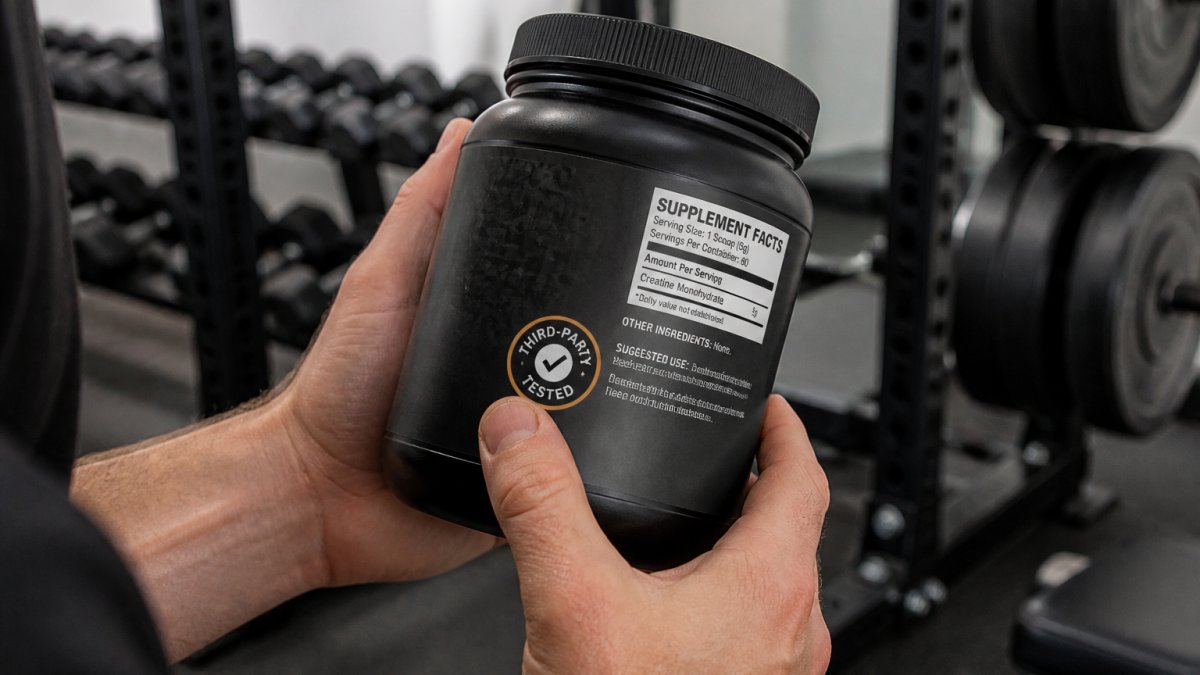
FDA's dietary supplement guidance explains that supplement manufacturers are responsible for the safety and labeling of their products, but the agency does not approve them before sale. That gap is exactly why third-party testing exists.
whether your creatine is real walks through the checks in order.
Certificates of Analysis and What They Prove
A certificate of analysis is a document from a testing lab that reports what a specific batch of product actually contained when it was analyzed. It typically covers identity, potency, and contaminant screening.
What a COA proves: the batch was tested, and the results matched the specification. What it does not prove: that every future batch will match, or that the tub in your hand came from the tested lot. Match the lot number. If the brand publishes a COA with no lot number attached, ask why. For a step-by-step method, see our guide on how to verify third-party supplement testing.
Creatine Without Fillers: What to Look For and What to Skip
The practical rule: if the ingredient panel has more than one line, ask what the extra lines are doing for your training. Usually the answer is nothing.
Creatine Monohydrate Dosage: Reading the Serving Scoop Correctly
Timing is far less important than total daily intake. Take it whenever you'll actually remember, with water or a shake. Our take: stop optimizing the clock and start optimizing the consistency.
Micronized vs. Regular Powder: Texture, Mixing, and Digestion
why creatine feels sandy covers what's expected and what signals a quality problem.
Red Flags That Should Stop You From Checking Out
Some warning signs are bad enough to abandon the cart. Treat these as stop signs, not yellow lights:
- No ingredient panel visible anywhere on the product page.
- No lot number, no COA, no testing lab named.
- Prices far below the market for the quantity, which usually signals a cut product.
- Reviews that read identically across multiple products, a sign of purchased feedback.
- A brand with no physical address or contact method beyond a web form.
- Claims about curing conditions or replacing medical treatment.
Stocking Your Shelf With Creatine That Meets the Bar
creatine delivers 5 grams of 100% micronized creatine monohydrate per serving, with no fillers and no unnecessary ingredients. If you want to see how it fits alongside the rest of our line, browse the full Shift8 creatine collection before you commit.
Frequently Asked Questions
Where can I buy pure creatine monohydrate online?
Buy directly from a brand's own website when possible, since that gives you the freshest stock and the clearest access to lab documents. Look for a seller that publishes third-party test results or a certificate of analysis you can request. Avoid marketplace listings with no brand storefront, vague ingredient panels, or prices that seem too low for the quantity. Shift8 Labs sells its creatine through its own site, so you can check the label and testing details before adding to cart.
How can I tell if creatine monohydrate is pure?
Start with the ingredient panel: pure creatine monohydrate should list one ingredient, with no added sugars, flavors, or proprietary blends. Next, look for third-party testing from an independent lab, and ask the brand for a certificate of analysis if it is not posted. A clear serving size of 3 to 5 grams per scoop is another sign the product is straightforward. If a label hides the dose inside a blend or lists several unlabeled ingredients, treat it as a red flag.
How much creatine monohydrate should I take per day?
A common maintenance dose is 3 to 5 grams per day for most adults, taken consistently rather than sporadically. Some people load at higher amounts for a short period, but daily consistency at the maintenance dose works well for most lifters. Check the scoop size on your tub so you know exactly how many grams you are getting per serving. If you are unsure about your own needs, talk to a healthcare provider before starting.
Is micronized creatine monohydrate different from regular creatine?
Micronized creatine has been milled into finer particles, which usually means it mixes more easily and feels less gritty in water. The active ingredient is the same creatine monohydrate, so the performance benefit is comparable. If you dislike sandy texture or your powder clumps at the bottom of a shaker, micronized is worth the small premium. Neither form replaces the need to check for third-party testing and a clean ingredient panel.
The supplement aisle rewards brands that hide behind blends and vague labels. You don't have to play along. Get started with Shift8 Labs and stock a creatine that lists one ingredient, states its dose, and lets you verify the batch.
