

Table of Contents
- Why Creatine Feels Sandy: The Science Behind the Texture
- How to Dissolve Creatine in Water for a Smoother Mix
- How to Drink Creatine Without It Being Grainy
- Normal Sediment vs. Signs of a Product Problem
- How to Tell If Creatine Is Spoiled
- What Micronized Creatine Monohydrate Offers
- Frequently Asked Questions
Last Updated: October 13, 2026
Why Creatine Feels Sandy: The Science Behind the Texture
Is creatine supposed to feel sandy? No, in fact, is creatine supposed to feel sandy at all? The gritty sensation is likely normal and doesn't mean your supplement is bad. It happens because creatine monohydrate doesn't dissolve completely in water, especially cold water.
Creatine monohydrate is the most researched form of creatine: affordable, effective, and widely used. Its one drawback is that it doesn't mix smoothly, leaving particles suspended in liquid and creating that sandy mouthfeel.
The good news: this texture problem is solvable with the right mixing technique.
Creatine Monohydrate's Low Solubility in Water
Creatine monohydrate has naturally low solubility in water, so its particles don't break down and blend like sugar or salt. They remain suspended throughout your drink.
This isn't a product flaw, it's how the molecule behaves. In cold water, most of the powder stays as undissolved crystals, which creates the sandy texture on your tongue.
Cold water holds less dissolved creatine than warm water, which is why temperature matters so much when mixing.
Particle Size and Micronization Matter
Particle size affects how creatine mixes and feels in your mouth.
Standard creatine monohydrate has larger particles; micronized creatine has been processed into smaller pieces that suspend more evenly and feel less gritty.
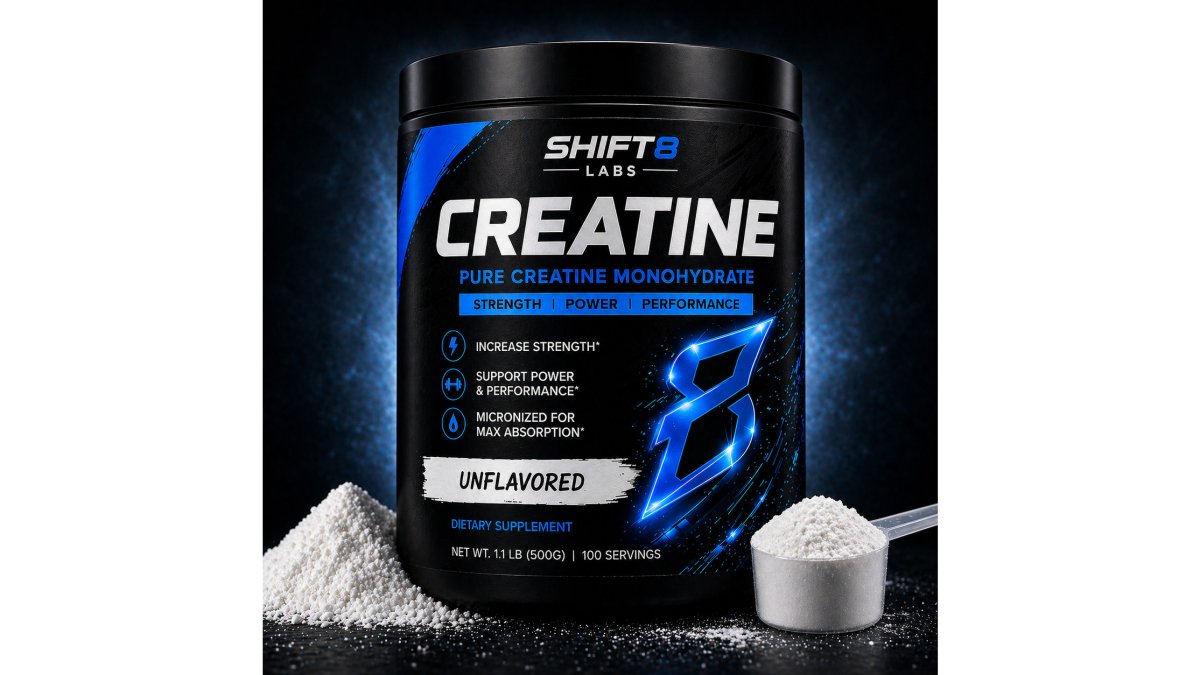
At Shift8 Labs, our Creatine uses micronized creatine monohydrate to address this texture issue: smoother mixing and a more pleasant drinking experience, with the same 5 grams of pure creatine monohydrate per serving.

Micronization doesn't change creatine's effectiveness, it's purely a quality-of-life improvement. If you're tired of that sandy feeling, switching to a micronized product is one of the easiest fixes.
How to Dissolve Creatine in Water for a Smoother Mix
The way you mix creatine directly affects how sandy it feels. Most people use cold water and wonder why the texture is terrible.
Start with warm or hot liquid instead of cold water. This single change makes the biggest difference, since warm liquid lets more creatine dissolve rather than suspend as particles. Use water that's warm to the touch, not boiling.
Add your creatine powder to the warm liquid and stir for at least 30 seconds. The longer you stir, the more particles break down and blend in.
Temperature's Role in Dissolving Creatine
Temperature is the primary factor controlling how much creatine dissolves versus stays suspended.
Cold water dissolves very little creatine, which is why ice-cold drinks feel the grittiest.
Warm water dissolves significantly more creatine, not all of it, but enough to noticeably reduce the sandy sensation, changing the experience from "this feels like sand" to "a bit grainy but drinkable."
Hot water dissolves even more. Many athletes mix creatine into hot water, let it sit for a minute, then add cold juice or flavoring to bring the temperature down to something drinkable.
Step-by-Step Mixing Method
Follow this process to minimize grit:
-
Fill your shaker bottle or glass with 6-8 ounces of warm water. Warm enough to hold comfortably, not uncomfortably hot.
-
Add your creatine powder. Use the recommended dose, typically 5 grams per serving.
-
Stir or shake vigorously for 30-60 seconds. The longer you mix, the better the particles break apart.
-
Let it sit for 30 seconds. This gives remaining particles time to settle and blend.
-
Stir one more time before drinking. A quick final stir ensures everything is mixed as much as it will be.
-
Drink it within a few minutes. Particles will start to settle again if you let it sit too long.
This method takes less than two minutes and is the difference between a sandy drink and a tolerable one.
How to Drink Creatine Without It Being Grainy
Beyond mixing technique, your choice of liquid matters.
Flavor and Liquid Selection
Flavored drinks work better than plain water. Juice, sports drinks, or flavored water give your mouth something else to focus on besides the texture.
Choose stronger flavors: orange juice, grape juice, or flavored sports drinks distract from the particles.
Avoid thin liquids like plain water or light tea, which don't hide the texture at all.
Thicker liquids also help: smoothies or protein shakes mask the grittiness, and mixing creatine into a protein shake you already drink is an excellent option.
Temperature matters here too: warm juice feels less gritty than cold juice because warm liquid allows more dissolution.
What to Do With Sediment at the Bottom
Even with perfect mixing, some creatine particles will settle to the bottom. This is completely normal.
You have two options. First, stir again right before finishing and drink the sediment. The particles are harmless, just creatine that didn't dissolve.
Second, leave the sediment and drink only the liquid above it. You'll get less creatine, but a smoother experience if you're sensitive to texture.
Most athletes stir and drink the whole thing. The sediment is your supplement, not waste.
Normal Sediment vs. Signs of a Product Problem
Not all sediment means something is wrong. The key is separating the undissolved powder creatine monohydrate always leaves behind from the warning signs of a compromised product. A simple visual and smell check answers the question in under a minute.
What Normal Sediment Looks Like
Normal creatine sediment is fine, white, and crystalline, looking exactly like the powder in your container. It settles within a minute or two and won't dissolve no matter how long you stir, expected behavior for creatine monohydrate's low solubility.
Normal sediment has no meaningful taste: it tastes like whatever you mixed it into, with only a faint chalky note on its own.
Checks That Point to a Product Problem
Run through these checks if something seems off. Any single one is a reason to stop and look closer before you keep using the product.
- Color. Fresh creatine monohydrate is white to off-white. Yellow, brown, gray, or pinkish tones are not normal and suggest moisture exposure, contamination, or degradation.
- Texture in the container. Dry creatine should pour and flow like fine sand. Hard clumps, bricks, or chunks that resist a spoon mean moisture has gotten in. A few soft clumps that break apart with light pressure are usually fine; rock-hard clumps are not.
- Smell. Creatine monohydrate has a very faint, almost undetectable odor. A sour, musty, ammonia-like, or distinctly chemical smell is a red flag.
- Taste. Beyond the faint chalky note, creatine should not taste bitter, sour, or metallic. An off taste in the sediment or the drink itself is a reason to stop.
- Packaging. Check the seal, the lot number, and the expiration or best-by date. Torn seals, bulging containers, or powder that arrived damp are signs the product was compromised before it reached you.
- Moisture in the scoop. If the scoop comes out coated in damp powder or the inside of the container feels humid, moisture has entered.
A Simple Decision Framework
If the powder is white, dry, and odorless, and the only issue is that it will not fully dissolve, you have normal sediment. Stir it back in and drink it. The particles are just creatine that did not dissolve, and they are harmless.
If you see discoloration, hard clumps, an off smell, an off taste, or damaged packaging, treat it as a product problem. Do not keep using it. Check the label and the best-by date, and contact the retailer or manufacturer. If you have already consumed some and feel unwell, see a qualified health professional.
Why Grit Alone Is Not a Quality Verdict
A gritty mouthfeel by itself does not prove a product is low quality or unsafe. Particle size, formulation, and the temperature of your liquid all affect how a powder feels in your mouth. A fine, micronized powder can still feel slightly grainy in ice-cold water, and a coarser powder can feel smoother in warm water. Judge the product on the checks above, not on texture alone.
How to Tell If Creatine Is Spoiled
Creatine monohydrate is stable, but it can degrade under the wrong conditions. Knowing what to look for prevents you from consuming a compromised product.
When Persistent Texture or Symptoms Warrant Stopping Use
Most people experience zero side effects from creatine. It's one of the most researched and safest supplements available. But if something feels wrong, stop using it.
Persistent digestive issues after starting creatine warrant stopping. Some people experience bloating or stomach discomfort when they first start supplementing.
Nausea or headaches that appear right after consuming your creatine drink are another reason to stop. These aren't typical creatine side effects.
Unusual muscle pain or weakness that coincides with starting creatine is worth investigating. Creatine supports muscle performance, it shouldn't cause pain. If you experience this, stop and consult a healthcare provider.
The sandy texture itself is never a reason to stop unless it's so severe that you can't consume the supplement. The grittiness is uncomfortable but harmless.
What Micronized Creatine Monohydrate Offers
Micronized creatine monohydrate is standard creatine that's been processed to reduce particle size. The result is a product that mixes more smoothly and creates less of that sandy sensation.
The key benefit is texture improvement. Micronized creatine disperses more evenly in liquid.
Micronization doesn't change creatine's effects on strength, power, or muscle performance. You get the same 5 grams of pure creatine monohydrate per serving. The only difference is how pleasant it is to drink.
Micronized creatine costs slightly more than standard creatine. The processing adds a small expense. But for most people, the improved drinking experience justifies the difference.
Shift8 Labs Creatine uses micronized creatine monohydrate because we understand that supplements only work if you actually take them consistently.
If you're serious about strength training and muscle recovery, the texture of your supplement shouldn't get in the way. No fillers, no unnecessary ingredients, just what your body needs to build strength and recover between workouts. Shop Shift8 Labs Creatine and experience the difference clean formulation makes.
Frequently Asked Questions
Why does creatine feel like sand in my mouth?
Creatine monohydrate has low solubility in water, meaning it doesn't dissolve completely, especially in cold liquids. This leaves undissolved powder particles suspended in your drink, creating that sandy or gritty texture. The smaller the particle size (micronized creatine dissolves better), the less pronounced the sensation. Mixing in warm water or flavored drinks can improve the mouthfeel significantly.
How can you tell if creatine is spoiled?
Spoiled creatine may show clumping, discoloration, an off odor, or unusual texture changes beyond normal sediment. Pure creatine monohydrate powder should be white or off-white and free-flowing. If your creatine develops a sour smell, changes color, or causes unusual side effects like nausea or stomach upset that persist after mixing properly, stop use and contact the manufacturer. Proper storage in a cool, dry place extends shelf life.
Does creatine monohydrate dissolve completely in water?
No, creatine monohydrate does not fully dissolve in water due to its low solubility. This is normal and expected. You will always have some undissolved particles, which is why sediment at the bottom of your glass is not a sign of a problem. Micronized creatine (smaller particle size) dissolves better than standard powder, reducing grittiness. Warm water and flavored drinks improve dissolution compared to cold water.
How do I drink creatine without it being grainy?
Mix creatine into warm or hot liquid rather than cold water, heat improves solubility. Stir thoroughly for 30-60 seconds. Use flavored drinks like juice or sports beverages instead of plain water; the flavor masks the texture and helps suspension. Choose micronized creatine, which has a smaller particle size and mixes more smoothly. Even with these steps, expect some sediment; stir before each sip and drink the sediment at the bottom, it's safe and beneficial.