

Table of Contents
- Why Artificial Sweeteners Matter in Your Protein Powder
- Common Artificial Sweeteners in Supplements
- How to Read Supplement Ingredient Labels
- Natural vs. Artificial Sweeteners in Protein
- Regulatory Labeling Loopholes and What They Mean
- Long-Term Effects: Gut Microbiome and Digestive Health
- Common Mistakes to Avoid When Checking Protein Powder
- Choosing Clean Protein: What to Look For
- Frequently Asked Questions
Last Updated: October 2, 2026
Why Artificial Sweeteners Matter in Your Protein Powder
Most athletes check the protein content and ignore the ingredient list. The real story lives in the sweeteners manufacturers use to make their powders taste good without adding sugar.
Understanding how to identify artificial sweeteners in protein powder is the difference between a clean supplement and one loaded with additives your body doesn't need. Not every brand prioritizes transparency, which is why knowing what to look for on a label matters.
Artificial sweeteners like sucralose, acesulfame potassium, and aspartame have become industry standard because they're cheap and let manufacturers slash calories while keeping products palatable. But emerging research raises questions about their long-term effects on your gut microbiome, insulin response, and digestive health, which is why serious athletes are starting to demand better.
This guide walks you through exactly how to read a supplement ingredient label, spot hidden sweeteners, and understand what each one actually does to your body.
Common Artificial Sweeteners in Supplements
The supplement industry relies on a handful of synthetic sweeteners to hit that sweet spot between taste and calorie count. Knowing these by name is the first step to avoiding them if that's your goal.
Sucralose and Acesulfame Potassium
Sucralose is everywhere. It's 600 times sweeter than sugar, it's heat-stable, and it's cheap. You'll see it listed on labels as "sucralose", no hiding the name. Acesulfame potassium (also called acesulfame K or Ace-K) works similarly. It's another synthetic sweetener that manufacturers pair with sucralose because together they mask the bitter aftertaste that either one produces alone.
Sucralose doesn't get fully broken down in your digestive system and can affect your gut bacteria over time. Acesulfame potassium has a similar profile. Neither spikes blood sugar immediately, but their long-term impact on your microbiome, which influences digestion, immune function, and mood, is still being studied.
Many athletes report bloating or digestive discomfort after using products heavy in these sweeteners because synthetic sweeteners alter your gut bacteria in ways we're still learning about.
Aspartame and Saccharin
Aspartame has been used since the 1980s and is about 200 times sweeter than sugar (the FDA). It breaks down into aspartic acid and phenylalanine in your body. For most people this is fine, but if you have phenylketonuria (PKU), a rare genetic condition, aspartame is dangerous, which is why labels carry a phenylalanine warning.
Saccharin, used since the early 1900s, is about 300 times sweeter than sugar and cheap, but has an unpleasant aftertaste so manufacturers usually blend it with other sweeteners.
Both have been studied extensively and don't directly spike blood glucose, but emerging research suggests they may alter your insulin response over time, worth noting if you're focused on metabolic health.
How to Read Supplement Ingredient Labels
This is where the real skill comes in. A supplement label tells you everything, but only if you know where to look and what the terms actually mean.
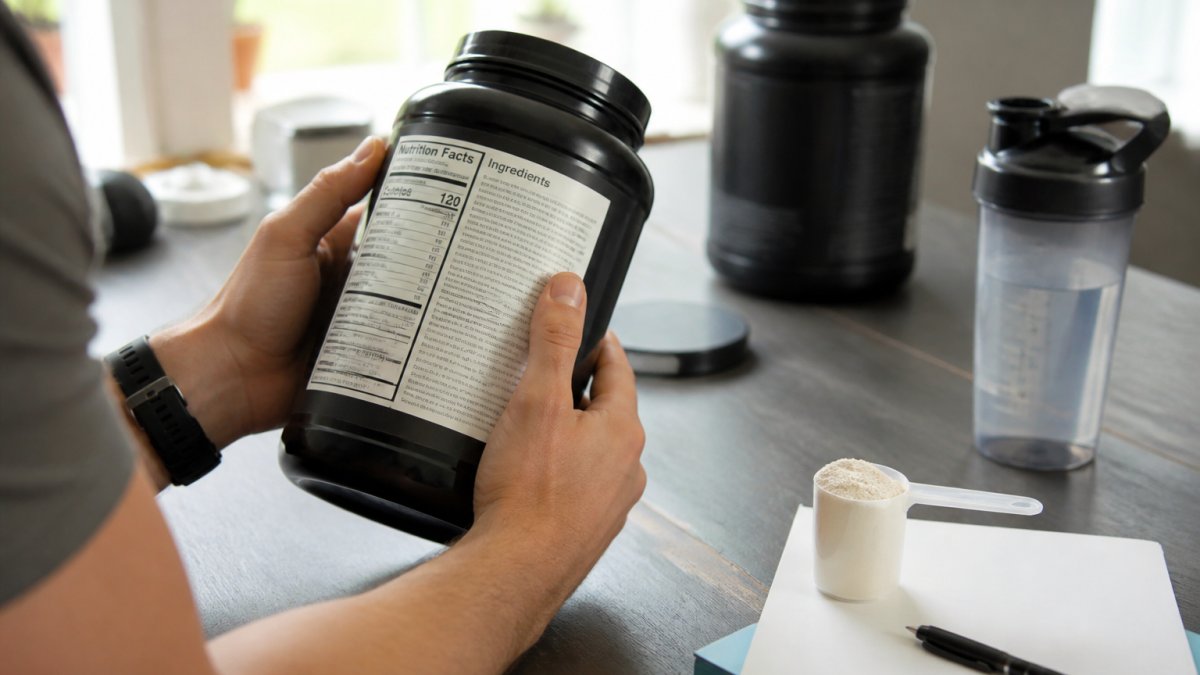
Step 1: Check the Supplement Facts Label First
The Supplement Facts label lists serving size, servings per container, nutrients, and ingredients. Start here, not with marketing claims on the front.
Check the serving size first. A protein powder serving should be around 25-35 grams. If it's less, the brand is using an unrealistically small serving size to inflate the numbers.
Scan the ingredient list, which is ordered by weight. If a sweetener is listed second or third, the powder is heavily sweetened.
Step 2: Identify the Sweetening Agents Section
Look for these sweetener names: sucralose, acesulfame potassium, aspartame, and saccharin (artificial); stevia leaf extract, monk fruit extract, erythritol, and xylitol (natural or naturally derived). Multiple sweeteners listed together indicate a blend designed to improve taste.
Some brands hide sweeteners under vague terms like "natural flavors" or "flavor blend." If the ingredient list doesn't explicitly name the sweetening agent, contact the manufacturer.
Step 3: Spot Hidden Sweeteners and Fillers
Sugar alcohols like erythritol and xylitol don't spike blood sugar but can cause digestive issues, bloating, gas, and diarrhea are common complaints.
Watch for: Proprietary blends (you don't know what's in them), maltodextrin (a filler that spikes blood glucose like sugar), dextrose (another form of glucose), and natural flavors (a vague category that can hide sweeteners).
The rule: if you can't pronounce it or don't know what it is, look it up. A clean label has ingredients you recognize.
Natural vs. Artificial Sweeteners in Protein
The choice between natural and artificial sweeteners isn't as simple as "natural good, artificial bad." Both have trade-offs. What matters is understanding how each one affects your body and your training.
Natural Alternatives: Stevia, Monk Fruit, and Erythritol
Stevia doesn't affect blood glucose or insulin response, but has a bitter aftertaste so manufacturers usually blend it with other sweeteners.
Monk fruit extract doesn't spike blood sugar and tastes cleaner than stevia, but it's more expensive so it appears less often in mainstream powders.
Erythritol has minimal impact on blood glucose but can cause digestive distress, bloating and gas are common, especially in larger amounts.
Natural sweeteners cost more and often require blending to taste good, but they minimize exposure to synthetic chemicals.
Impact on Blood Glucose and Insulin Response
Here's where the science gets interesting. Artificial sweeteners don't directly raise your blood glucose the way sugar does. They're non-nutritive, your body doesn't metabolize them for energy. So in the immediate sense, they don't spike insulin.
But emerging research suggests the picture is more complex. Some studies indicate that regular consumption of artificial sweeteners may alter your insulin sensitivity over time. Your body might become less responsive to insulin, which could affect how you handle carbohydrates during and after training. For athletes, that's significant. Your ability to shuttle glucose into muscle cells after a workout is crucial for recovery.
Natural sweeteners like stevia and monk fruit have a similar profile, they don't spike blood glucose directly. But they also don't trigger an insulin response, which some research suggests might affect satiety and hunger signaling over time. Your body's hunger hormones are complex, and sweeteners (artificial or natural) can influence them in ways we're still understanding.
The practical takeaway: if you're tracking your metabolic health and insulin response, pay attention to how you feel after using products with any sweetener, artificial or natural. Some athletes notice better energy and faster recovery with lower-sweetener options. Others don't notice a difference.
Regulatory Labeling Loopholes and What They Mean
The FDA regulates supplements, but the rules are looser than they are for pharmaceuticals (the FDA). That creates gaps that manufacturers exploit, and you need to know about them.
One major loophole: proprietary blends. If a manufacturer lists a "proprietary blend" of ingredients, they don't have to disclose the individual amounts. They only have to list the total weight of the blend. That means you could have a blend that's 90% filler and 10% active ingredient, and you'd never know. Transparent brands break down each ingredient and its amount separately.
Another gap: "natural flavors" can include sweeteners, and manufacturers don't have to list them separately if they're part of the flavoring system. So a product labeled "naturally flavored" might still contain synthetic sweeteners hidden under that broad category. Always ask the manufacturer directly if you see "natural flavors" without specifics.
Third: allergen labeling is required for major allergens (milk, soy, nuts, etc.), but it's not required for every additive.
Long-Term Effects: Gut Microbiome and Digestive Health
This is the frontier of supplement science. Your gut microbiome, the trillions of bacteria living in your digestive system, influences everything from digestion to immune function to mood. Artificial sweeteners affect this ecosystem.
Common Mistakes to Avoid When Checking Protein Powder
Most people make the same errors when reading labels. Knowing these mistakes saves you from wasting money on subpar products.
Choosing Clean Protein: What to Look For
A clean protein powder is straightforward. It has protein, a minimal sweetener, and nothing else you don't recognize.
Look for these markers of quality:
- Whey protein isolate or concentrate as the first ingredient (or plant-based alternatives like pea or hemp if you prefer)
- One sweetener maximum, preferably stevia, monk fruit, or erythritol (or no sweetener at all if you can handle the taste)
- No proprietary blends, every ingredient listed with its amount
- No artificial colors, flavors, or dyes, these add nothing to the product except complexity
- Third-party testing, reputable brands test their products for purity and potency
Frequently Asked Questions
What are the most common artificial sweeteners found in protein powder?
Sucralose, acesulfame potassium (ACE-K), aspartame, and saccharin are the most prevalent artificial sweeteners in protein powders. Sucralose is particularly common because it's heat-stable and doesn't leave a bitter aftertaste. Acesulfame potassium often appears alongside sucralose for enhanced sweetness. Check your ingredient list for these chemical names to identify which sweetening agents are in your powder.
How can I tell if a protein powder is naturally sweetened?
Look for stevia, monk fruit, erythritol, or sugar alcohols listed in the ingredient section. Naturally sweetened powders will display these names directly on the label. Be aware that some brands use the term 'natural flavors' without specifying the sweetener type, which can mask artificial ingredients. Request full ingredient transparency from manufacturers if the label isn't clear about sweetening sources.
Are stevia and monk fruit considered artificial sweeteners?
No. Stevia and monk fruit are plant-derived sweeteners classified as natural, not artificial. They come from the stevia plant and luo han guo fruit respectively. Unlike synthetic sweeteners like sucralose or aspartame, these options don't undergo chemical synthesis and may have fewer documented effects on gut microbiome and insulin response, making them popular choices for athletes seeking cleaner formulations.
Why do manufacturers use artificial sweeteners in protein powder?
Manufacturers use artificial sweeteners because they're inexpensive, provide intense sweetness without calories, and remain stable during manufacturing and storage. They also don't affect blood glucose levels, which appeals to fitness-focused consumers. However, this cost advantage often means less investment in quality ingredients elsewhere, which is why reading the full label matters beyond just sweetener identification.
Understanding how to identify artificial sweeteners in protein powder puts you in control of what goes into your body. The label is your guide, read it carefully, ask questions when something's unclear, and demand transparency from the brands you trust with your recovery. Clean supplements start with clean ingredients, and that begins with knowing exactly what you're looking at.