

Table of Contents
- How Supplement Texture Affects Dissolution and Absorption
- Understanding Supplement Bioavailability Beyond Texture
- Powder vs Capsules Supplements: What the Evidence Shows
- How to Improve Supplement Absorption: Factors That Actually Matter
- Assessing Product Quality: What to Look for Beyond Feel
- Texture, Usability, and Your Supplement Adherence
- Frequently Asked Questions
Last Updated: October 12, 2026
How Supplement Texture Affects Dissolution and Absorption
Why supplement texture matters for absorption starts with a simple fact: your body can only absorb what it can break down, and texture determines how fast that happens.
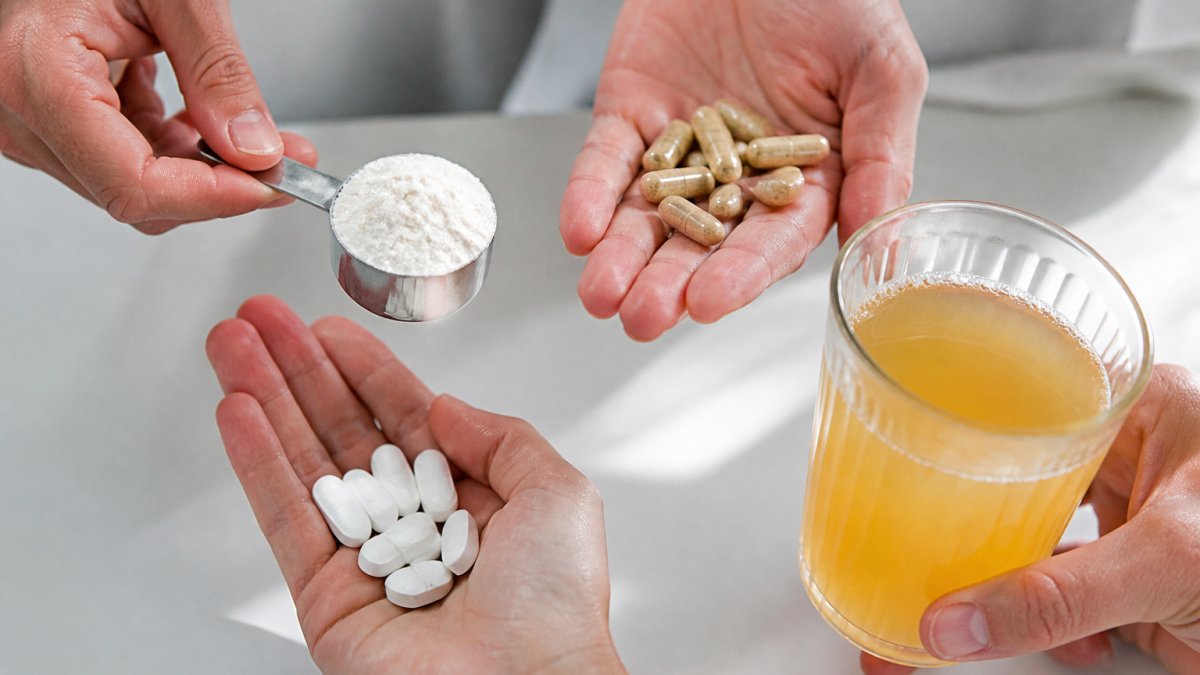
When you swallow a supplement, its physical form, powder, capsule, tablet, or gummy, affects how quickly it dissolves in your stomach and intestines. A powder dissolves faster than a tablet, a capsule releases its contents only after the shell breaks down, and a gummy must be chewed before digestion begins.
This matters because absorption depends on time and surface area. Finer particles give digestive enzymes more surface area, which means faster breakdown and more nutrient reaching your intestinal lining.
What happens when texture changes dissolution speed
Dissolution speed is the rate at which a supplement breaks apart in your digestive fluids. It's not absorption, but it's a necessary step before absorption can occur.
A powder can begin dissolving within minutes of hitting stomach acid because its particles are already small.
Capsules fall in the middle. The shell protects contents from stomach acid, which helps some nutrients, but once it dissolves (typically 10-15 minutes), the powder inside still needs to break down.
The practical implication: for quick nutrient delivery, like amino acids around training, a powder gets to work faster than a tablet. With food, the difference shrinks because food already slows digestion.
Why particle size and texture matter in your digestive system
Particle size is the physical dimension of each piece. Finer particles (measured in microns) have more total surface area than coarser ones at identical weight.
Digestive enzymes break chemical bonds at the boundary between enzyme and nutrient, so a powder with 100-micron particles presents far more surface area than a tablet of the same weight. This is basic chemistry, not marketing.
Texture also signals manufacturing quality: a gritty powder suggests large particles and poor milling, while a smooth one suggests finer processing.
Our protein powders use ultra-filtered whey isolate that mixes smoothly.
Understanding Supplement Bioavailability Beyond Texture
Bioavailability is the percentage of a nutrient that actually reaches your bloodstream. It's the gold standard for measuring whether a supplement works.
Texture influences bioavailability, but it's not the only factor. A supplement can dissolve perfectly yet absorb poorly if the nutrient form is weak, while a gritty powder can absorb excellently if the form is highly absorbable.
The difference between bioavailability and nutrient form
Nutrient form refers to the specific chemical structure of the nutrient. Vitamin C as ascorbic acid differs from calcium ascorbate, and ferrous sulfate absorbs differently than ferric citrate. The form matters as much as the texture.
Bioavailability testing requires human studies measuring blood levels after consumption. It's expensive and time-consuming, so most companies rely instead on in vitro dissolution tests that measure how fast a supplement breaks apart in simulated stomach fluid.
Dissolution tests are useful but don't measure absorption in a living human.
What texture cannot tell you about absorption
Texture is visible and tangible, which makes it easy to judge, and easy to misinterpret.
A smooth powder might contain silica or maltodextrin fillers that improve flow, not absorption, while a gritty powder might be pure creatine monohydrate with excellent bioavailability. Feel is not a reliable indicator of what's inside.
Particle size matters for dissolution speed only up to a point. Once particles are roughly 100 microns or smaller, further reduction doesn't improve absorption, the limiting factor becomes nutrient form and gut health.
At Shift8 Labs, we prioritize clean formulations because results depend on what's in the supplement, not how it feels going down.

Powder vs Capsules Supplements: What the Evidence Shows
Comparing supplement forms requires understanding what each type optimizes for, speed, convenience, shelf stability, or nutrient protection.
How powders, capsules, tablets, gummies, and liquids compare
Powders dissolve fastest and offer flexible dosing, you control the amount and can mix with food or liquid.
Capsules protect sensitive nutrients from stomach acid and offer convenience. The shell delays release, which helps some nutrients but slows others.
Gummies are convenient and taste good, but require chewing and often contain added sugar or sugar alcohols.
Liquids dissolve instantly and suit people who can't swallow pills, with typically high bioavailability. They require refrigeration, have shorter shelf life, and are less portable.
| Supplement Form | Dissolution Speed | Convenience | Shelf Stability | Bioavailability Potential |
|---|---|---|---|---|
| Powder | Very fast | Requires mixing | Excellent | High |
| Capsule | Moderate | High | Excellent | Medium to high |
| Tablet | Slow to moderate | High | Excellent | Medium |
| Gummy | Moderate | High | Good | Variable |
| Liquid | Instant | High | Fair | High |
Dissolution, disintegration, and what each means for your body
Dissolution is the process of a supplement breaking apart into smaller particles in your digestive fluid.
Disintegration is the breaking apart of a solid supplement (tablet or capsule) into smaller pieces. It happens before dissolution.
Bioavailability is the percentage of the nutrient that actually enters your bloodstream. It's the only metric that matters for results, but it's the hardest to measure.
In practice, faster dissolution usually correlates with better bioavailability, but not always.
The takeaway: texture and form matter, but they're not destiny. Your gut health, diet, and the specific nutrient form determine the final outcome.
How to Improve Supplement Absorption: Factors That Actually Matter
If texture matters for absorption, other factors matter more. Here's what actually changes the needle.
Gut health, intestinal lining, and nutrient uptake
Your intestinal lining is where absorption happens. Nutrients cross from your digestive tract into your bloodstream through the intestinal wall. If that wall is inflamed, damaged, or compromised, absorption suffers regardless of supplement texture.
Gut health depends on several factors:
- Microbiome diversity: A healthy microbiome supports nutrient synthesis and absorption. Antibiotics, poor diet, and chronic stress reduce diversity.
- Intestinal lining integrity: Inflammation, food sensitivities, and certain health conditions damage the intestinal lining. This reduces absorption across the board.
- Stomach acid production: Low stomach acid (common with age and certain medications) slows nutrient breakdown and absorption.
- Digestive enzyme production: Your pancreas produces enzymes that break down nutrients. Aging and digestive disorders reduce enzyme output.
Supporting gut health matters more than optimizing supplement texture. A person with excellent gut health will absorb nutrients from a tablet nearly as well as from a powder. A person with compromised gut health will struggle with any supplement form.
Diet, meal timing, and nutrient interactions
What you eat alongside your supplement changes absorption dramatically.
Fat-soluble vitamins (A, D, E, K) require dietary fat for absorption. Taking them on an empty stomach wastes them. Taking them with a meal containing fat (olive oil, nuts, meat, dairy) significantly improves absorption.
Some nutrients compete for absorption. Iron and calcium both use the same absorption pathway, so taking them together reduces absorption of both. Separating them by a few hours fixes this.
Timing matters less than most people think. Taking a supplement with food slows absorption slightly but often improves overall uptake because food provides the cofactors needed for absorption. The exception is supplements that should be taken on an empty stomach (specified on the label).
Age, health conditions, and digestive factors
Absorption efficiency declines with age. Stomach acid production drops, enzyme output decreases, and the intestinal lining becomes more permeable. People over 50 often absorb nutrients less efficiently than younger people, even with identical supplement forms.
Health conditions that affect absorption include:
- Celiac disease and non-celiac gluten sensitivity: Damage the intestinal lining and reduce absorption across multiple nutrients.
- Inflammatory bowel disease (IBD): Causes intestinal inflammation that impairs absorption.
- Diabetes: Affects nutrient uptake and metabolism.
- Certain medications: Proton pump inhibitors (acid reflux drugs) reduce stomach acid and impair absorption of several nutrients.
- Smoking and heavy alcohol use: Damage the intestinal lining and reduce nutrient uptake.
If you have a digestive condition, supplement form matters less than addressing the underlying condition. A texture upgrade won't fix absorption problems caused by IBD or low stomach acid.
Assessing Product Quality: What to Look for Beyond Feel
Texture feels important because you experience it directly. But quality goes deeper.
How to evaluate supplement quality and identify fillers
Clean supplements contain the active ingredient and minimal extras. Fillers are ingredients that add weight or volume without nutritional benefit.
Common fillers include:
- Maltodextrin: A carbohydrate used to improve texture and flow. It adds calories and carbs without benefit.
- Silica: Used to prevent clumping. It's inert and doesn't absorb, but it's also not harmful.
- Cellulose: Plant fiber used as a filler. It's not harmful but adds no value.
- Magnesium stearate: A lubricant used in tablet production. Necessary in small amounts but often overused.
Quality indicators include:
- Third-party testing: Look for NSF Certified for Sport, Informed Choice, or USP verification. These verify that the supplement contains what the label claims and is free of banned substances.
- Transparent labeling: The label lists every ingredient and its amount. Proprietary blends hide ingredient amounts and are a red flag.
- Minimal ingredients: Fewer ingredients mean fewer opportunities for fillers. Shift8 Labs products list exactly what you're getting, no mystery blends, no hidden fillers.
- Batch testing results:
Texture smoothness is not a quality indicator. It's a manufacturing choice. A gritty powder might be cleaner than a smooth one if the smooth one contains silica or other flow agents.
Texture, Usability, and Your Supplement Adherence
The best supplement is the one you actually take consistently.
Texture affects adherence. A powder that tastes terrible or feels gritty is easy to skip. A capsule that's easy to swallow increases consistency.
This is where texture legitimately matters for results.
Our approach at Shift8 Labs reflects this reality. Our Isolate Protein Vanilla and Isolate Protein Chocolate are formulated to mix smoothly and taste good because we know consistency drives results.

The same principle applies to our BCAA + EAA Powder in Strawberry Crush and BCAA Powder in Lime Revival.
Texture matters for adherence. Adherence matters for results. But texture alone doesn't determine absorption.
The supplement texture you experience tells you something real about how fast it will dissolve. But it doesn't tell you everything about absorption.
At Shift8 Labs, we've built our supplements around this principle: texture is part of the equation, but it's not the whole answer. Our Isolate Protein delivers 25g of protein with a digestive enzyme blend to support nutrient breakdown, and it's formulated to mix smoothly so you'll use it consistently. Shop our clean formulations and experience the difference purposeful design makes.
Frequently Asked Questions
Does supplement texture actually affect how well your body absorbs nutrients?
Texture influences how quickly a supplement dissolves and reaches your digestive system, which can affect the timing of nutrient absorption. However, texture alone does not determine bioavailability. A finely milled powder may dissolve faster than a dense tablet, but both can be equally absorbed if your gut health, digestive enzymes, and nutrient form are optimized. The real driver of absorption is whether your body can break down and absorb the nutrient itself, not just how fast the supplement falls apart.
How does powder vs capsules supplements compare for absorption?
Powders typically dissolve faster than capsules, which may speed up initial nutrient availability. Capsules take longer to disintegrate in stomach acid, delaying nutrient release. However, this timing difference rarely translates to measurably different absorption rates over a full day. Capsules offer convenience and portion control, while powders allow customization and may mix better with fat-soluble vitamins. Choose based on your lifestyle and how the supplement is formulated, not just the format alone.
What factors actually improve supplement absorption besides texture?
Gut health, stomach acid levels, intestinal lining integrity, and the presence of digestive enzymes are major factors. Fat-soluble vitamins (A, D, E, K) absorb better with dietary fat, while mineral absorption depends on stomach acid and meal timing. Nutrient interactions matter too: calcium can interfere with iron absorption, and some minerals compete for the same transport pathways. Age, medications, and digestive conditions like low stomach acid or IBD also reduce absorption. Texture is one small piece of a much larger picture.
How can you tell if a supplement is actually being absorbed?
You cannot reliably tell by feel or appearance alone. Third-party testing verifies ingredient content and purity, but absorption varies by individual. Look for products with transparent labeling, published third-party test results, and evidence-backed nutrient forms. Shift8 Labs formulations include digestive enzyme blends to support protein breakdown and nutrient uptake, which addresses absorption at the source. If you suspect poor absorption, work with a healthcare provider to assess your gut health and nutrient status through blood work.