

Table of Contents
- What Minimalist Supplement Formulations Actually Are
- The Real Performance Difference: Why Ingredient Reduction Matters
- Clean Label Supplements and Ingredient Transparency
- How to Read Supplement Labels for True Minimalism
- Reducing Chemical Load and Protecting Your Body
- Building a Minimalist Supplement Routine for Beginners
- Cost-Benefit Reality: Why Clean Formulations Cost More
- Frequently Asked Questions
Last Updated: September 28, 2026
What Minimalist Supplement Formulations Actually Are
Minimalist supplement formulations are intentional blends built around a single purpose: delivering exactly what your body needs, nothing more. At Shift8 Labs, we define this approach as stripping away fillers, binders, and unnecessary additives to focus on active ingredients that directly support your performance and recovery goals.

The difference between a minimalist formula and a conventional one comes down to philosophy. Most supplements pack in bulking agents, anti-caking agents, and proprietary blends that obscure what you're actually consuming. Minimalist formulations reject that model. You get the ingredient, the dose, and nothing else.
This matters because your body doesn't benefit from fillers. A 5-gram serving of creatine monohydrate does the work. The 2 grams of maltodextrin or silicon dioxide in conventional products? That's padding. When you're spending money on supplements to fuel your training, you're paying for performance, not filler weight.
The core principle is straightforward: clean label supplements prioritize ingredient transparency and potency. Every gram counts. Every ingredient serves a purpose.
The Real Performance Difference: Why Ingredient Reduction Matters
Removing unnecessary ingredients doesn't mean removing effectiveness. In fact, the opposite is often true.
When you eliminate fillers and bulking agents, you increase the concentration of active ingredients per serving. A minimalist creatine formula delivers more actual creatine per scoop than a bloated version. That's not a marginal difference, it's a fundamental shift in how much of the ingredient your body absorbs and uses.
Bioavailability improves when formulations are clean. Your digestive system processes fewer compounds, which means the active ingredients reach your muscles faster and more efficiently. Synergistic ingredient pairing also becomes more effective in minimalist formulas because there's less competition from filler compounds interfering with absorption pathways.
Consider the practical reality: athletes training hard need recovery support that works. A formula loaded with anti-caking agents and flow agents creates texture problems and digestive friction. Minimalist formulations solve this by focusing on solubility and nutrient delivery. You get a product that mixes cleanly, tastes better, and actually performs.
The manufacturing efficiency gain is real too. Fewer ingredients mean fewer variables to control and fewer quality assurance checkpoints.
Clean Label Supplements and Ingredient Transparency
Clean label supplements remove the guesswork from what you're putting in your body.
A transparent label tells you exactly what you're consuming. You see the ingredient, the dose, and nothing hidden behind "proprietary blend" language. This matters because proprietary blends are industry code for "we're not telling you the actual amounts." You could be getting 100 milligrams of an ingredient or 1 milligram, the label won't say.
Ingredient transparency builds trust because it eliminates the mystery. When you buy a Shift8 Labs product, you know what's in it. Our formulations list every active ingredient with its exact dose. No hiding. No guessing.
Regulatory compliance adds another layer of credibility. Purity testing and standardized extracts confirm that what's on the label matches what's in the bottle. This isn't optional for serious brands, it's the baseline expectation.
The consumer safety angle is critical too. Heavy metals, contaminants, and undisclosed additives have harmed athletes before. Brands that commit to clean formulations and third-party testing eliminate that risk. You're not just buying a supplement; you're buying assurance.
How to Read Supplement Labels for True Minimalism
Reading a supplement label correctly separates minimalist formulations from marketing hype, and helps you understand why clean products cost more.
Start with the ingredient list structure. Real minimalist supplements list every ingredient in descending order by weight. If you see "proprietary blend" anywhere, that's an immediate red flag; the manufacturer is hiding information. Minimalist brands don't hide. Count the total ingredients: minimalist formulations typically contain 3-8 active ingredients, while conventional supplements often list 15-20. Fewer ingredients isn't always better, but it's a reliable signal that the brand prioritizes transparency.
Check the dose next to each ingredient. Look for specific amounts in milligrams or grams. Vague language like "optimal blend" or "advanced formula" means the manufacturer won't commit to actual numbers. Minimalist formulations always specify doses because they're confident in what they're delivering. Compare these doses to clinical research standards: creatine monohydrate, for example, requires 5 grams daily for efficacy. If a label shows 3 grams, you're underdosed regardless of how clean the label is.
Identify fillers and bulking agents by name. Common ones include maltodextrin, microcrystalline cellulose, silicon dioxide, and magnesium stearate. These serve no performance purpose; their only function is to add weight and volume. Minimalist supplements either eliminate these entirely or use them sparingly for legitimate texture purposes only (e.g., a small amount of silicon dioxide to prevent clumping in a powder).
Check for third-party testing notation. Legitimate minimalist brands display certifications from NSF International, USP (United States Pharmacopeia), or ConsumerLab. These organizations verify that the product contains what the label claims and nothing harmful. This certification costs $2,000-$5,000 per product and requires ongoing compliance testing. Brands only pursue it when confident in their product. If a brand claims to be minimalist but has no third-party certification, ask why, the answer reveals their commitment level.
Evaluate the cost-per-dose against ingredient potency. This is where minimalist supplements justify their higher price. A conventional creatine supplement might cost $0.30 per serving but deliver only 4 grams of creatine (underdosed) plus 1.5 grams of filler. A minimalist version might cost $0.50 per serving but deliver the full 5 grams of creatine with zero filler. The minimalist option costs 67% more per serving but delivers 25% more active ingredient and zero wasted money on filler weight. Over a year of daily use, you're paying more per serving but less per gram of actual active ingredient.
Look at the supplement facts panel structure. Minimalist formulations have short, clean panels. Conventional supplements often have 15-20 ingredients. The fewer ingredients, the easier it is to understand what you're actually consuming and to identify which ingredient might cause a reaction if you experience side effects.
Reducing Chemical Load and Protecting Your Body
Your body processes every compound you consume, including fillers and additives. Minimalist formulations reduce that burden by eliminating compounds that serve no performance function.
Chemical load refers to the total volume of non-essential compounds your digestive system must process. Common fillers like maltodextrin, microcrystalline cellulose, magnesium stearate, and silicon dioxide add volume without nutritional benefit. While these are FDA-approved food additives and generally recognized as safe (GRAS), they still require hepatic and renal processing. Your liver must filter them, your kidneys must excrete them, and your digestive system must move them through your GI tract. Over time, this creates unnecessary metabolic work.
The cumulative effect matters more than single-dose exposure. Minimalist formulations eliminate this by using alternative manufacturing techniques that require fewer or no anti-caking compounds.
Digestive irritation is a measurable outcome. Many athletes report bloating, cramping, or loose stools from conventional supplements. This often stems from sensitivity to bulking agents, not the active ingredients. Microcrystalline cellulose, for example, is insoluble fiber that can trigger GI distress in sensitive individuals. Minimalist formulations solve this naturally by removing those ingredients entirely. If you've experienced digestive problems with supplements, switching to a minimalist alternative often resolves the issue within 2-3 servings.
Stability and shelf-life can improve with fewer ingredients. Each additional compound introduces potential chemical interactions that can degrade active ingredients over time. Fewer ingredients mean fewer oxidation pathways, fewer moisture-absorption vectors, and more predictable degradation curves. Your supplement maintains potency longer.
The practical benefit is efficiency: your body gets to direct energy toward recovery and adaptation instead of processing unnecessary additives.
Building a Minimalist Supplement Routine for Beginners
Start simple. Most beginners don't need a complex supplement stack.
Your foundation should be three categories: protein for muscle recovery, creatine for strength and power, and amino acids for training support. That's it. Everything else is secondary.
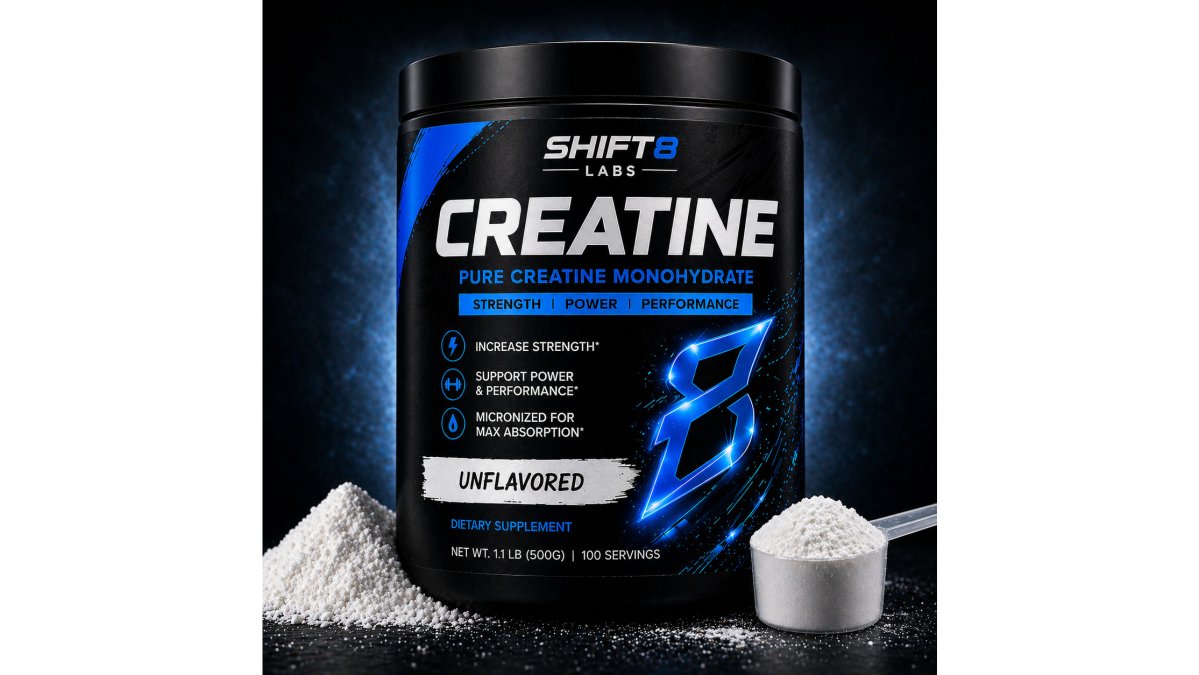
Shift8 Labs Creatine delivers 5 grams of micronized creatine monohydrate per serving with zero fillers. This supports muscle performance and recovery without unnecessary additives. Pair it with our BCAA + EAA Powder, which provides complete amino acid support during training. Add our Chocolate Protein Powder for post-workout recovery, and you have a minimalist routine that covers all the performance bases.

The key is intentionality. Choose supplements that serve a specific purpose in your training.
Cost-Benefit Reality: Why Clean Formulations Cost More
Minimalist supplements cost more per serving than conventional options. This isn't unfair pricing, it's the reality of clean manufacturing.
Frequently Asked Questions
Do minimalist supplement formulations actually work as well as complex blends?
Yes. Minimalist supplement formulations deliver results because every ingredient serves a specific function. Fillers and bulking agents add weight and cost without improving bioavailability or efficacy. When you remove unnecessary additives, the active ingredients work more efficiently. Clinical research supports this: creatine monohydrate, BCAAs, and amino acids produce measurable gains in strength and recovery whether formulated simply or with added complexity. The difference is that minimalist formulations eliminate waste, both in your body and your wallet.
How do I know if a supplement has too many fillers and unnecessary ingredients?
Check the ingredient list for anti-caking agents, flow agents, synthetic fillers, and bulking agents listed after the active compounds. Common red flags include magnesium stearate, silicon dioxide, and proprietary blends that hide exact dosages. Read the supplement facts panel: if the serving size contains far more weight than the active ingredients account for, fillers are doing the heavy lifting. Compare ingredient transparency across brands, companies committed to clean formulations publish third-party testing results and list every component with its exact dosage.
What should a minimalist supplement routine look like for someone just starting out?
Start with the fundamentals: a quality protein powder for recovery, creatine monohydrate for strength and muscle performance, and a BCAA or EAA formula if training fasted. These three address the core needs, muscle repair, strength gains, and amino acid support, without unnecessary complexity. Shift8 Labs Creatine delivers 5 grams of 100% micronized creatine monohydrate per serving with no fillers, and our BCAA + EAA Powder provides 5,000 mg BCAAs and 7,400 mg EAAs for complete amino support. Beginners don't need proprietary blends or exotic ingredients; they need purposeful dosing of proven compounds.
Why does minimalist formulation matter for safety and consumer trust?
Fewer ingredients mean fewer opportunities for contamination, heavy metals, or undisclosed additives. Ingredient transparency allows you to verify exactly what you're consuming and cross-reference it against third-party testing. Ingredient transparency allows you to verify exactly what you're consuming and cross-reference it against third-party testing, making it easier to spot red flags and avoid allergens or substances that trigger sensitivities. This accountability builds trust, you know what you're putting in your body and why each component is there.