

Last Updated: October 25, 2026
Quick Summary
Pre-workout older athletes need a different approach that matches how your body works now, starting with a safety check of your medications and health conditions before choosing a formula. Individual caffeine sensitivity varies widely, so start with a low dose of 100-150 mg and adjust deliberately over time, or consider stimulant-free options if you train in the evening, have elevated blood pressure, or take interacting medications.
- Check your medication list with a doctor or pharmacist before starting any pre-workout product.
- Start with 100-150 mg caffeine and change one variable at a time to find your threshold.
- Choose stimulant-free formulas if you train in the evening, have high blood pressure, or are caffeine-sensitive.
- Consume pre-workout 45-60 minutes before training for optimal timing.
- Avoid high-stimulant products with 250 mg or more caffeine unless your clinician approves.
Table of Contents
- Why Pre-Workout for Older Athletes Demands a Different Approach
- Pre-Workout Safety for Older Adults: Health Conditions and Medication Interactions
- Caffeine Dosage Before Exercise: Finding Your Threshold
- Stimulant-Free Pre-Workout Options for Sustained Energy
- Pre-Workout Ingredients for Endurance and Sustained Performance
- Building Your Pre-Workout Routine: Timing, Dosage, and Recovery
- Starting Your Pre-Workout Program as an Older Athlete
- Frequently Asked Questions
Why Pre-Workout for Older Athletes Demands a Different Approach
This isn't about being cautious or settling for less intensity. It's about matching your pre-workout strategy to how your body actually works now. The athletes who get this right see consistent performance gains without the crashes, sleep problems, or medication conflicts that derail training programs.
Pre-Workout Safety for Older Adults: Health Conditions and Medication Interactions
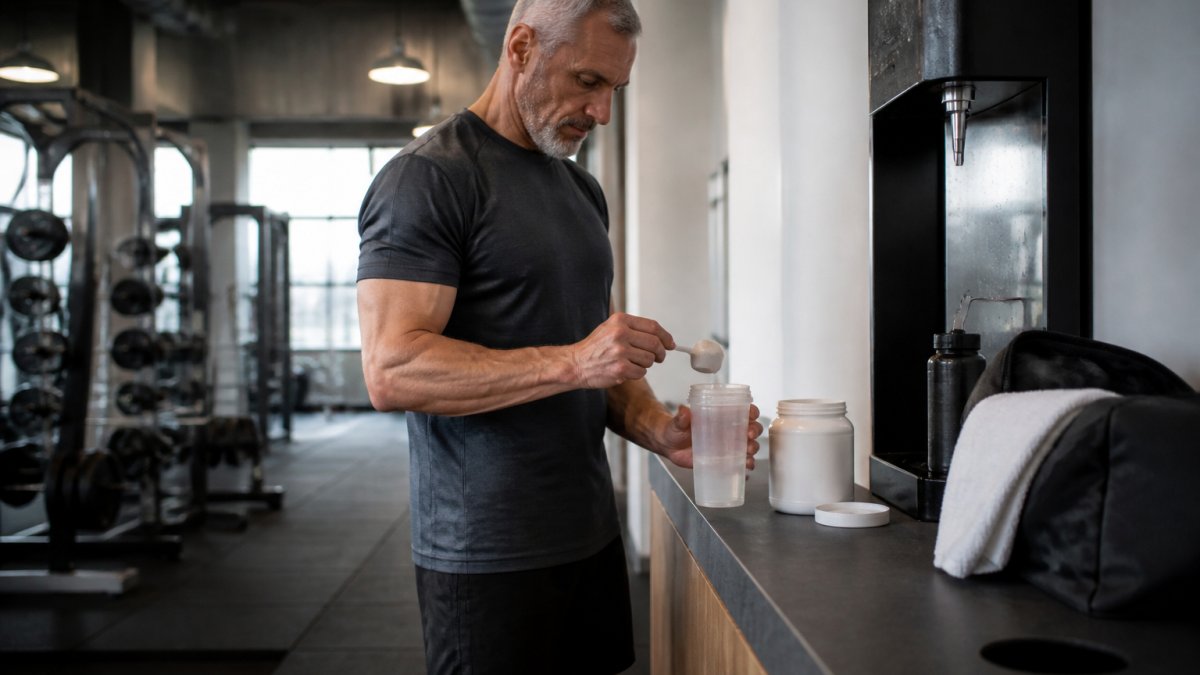
Safety is the first filter, not an afterthought. Many pre-workout products combine caffeine with beta-alanine, citrulline, beetroot, tyrosine, and sometimes yohimbine or synephrine. Each of those can matter if you manage a cardiovascular or metabolic condition or take prescription medication. The practical approach is to treat your medication list as part of your supplement label.
A clinician conversation checklist
Before your first serving, bring this list to your doctor or pharmacist.
- **
- **
- **
- **
- **
- **
Red flags in a formula
Also watch for stimulant stacking: a product may list caffeine anhydrous plus green tea extract plus guarana, which together can exceed the caffeine dose you intended. Check the total caffeine per serving, not just the first ingredient.
When to stop and call a clinician
A common pattern among older athletes is to tolerate a low dose for weeks, then add a second scoop or a stronger formula and run into trouble. Change one variable at a time, and keep your medication list current with your prescriber.
Caffeine Dosage Before Exercise: Finding Your Threshold
Individual caffeine sensitivity varies widely. Some athletes thrive on 150 mg; others feel wired at 100 mg. Your weight, caffeine history, medications, and sleep quality all influence how your body responds. The only way to find your threshold is to start low and adjust deliberately over time.
Stimulant-Free Pre-Workout Options for Sustained Energy
Stimulant-free formulas are not weaker versions of caffeinated products. Browse the full pre-workout product line to find stimulant-free options that match your training needs. They are a different tool, and for many older athletes they are the better default. The goal is readiness without the heart-rate spike, sleep disruption, or medication friction that caffeine can create.
Shift8 Ignite Berry Lemon Blitz Pre-Workout →
What stimulant-free ingredients actually do
- **
- **
- **
- **
- **
Stimulant-free versus low-caffeine: how to choose
- Choose stimulant-free if you train in the evening, have elevated blood pressure, take medications that interact with stimulants, are sensitive to caffeine, or have trouble sleeping after hard sessions.
- Choose low-caffeine (100-150 mg) if you train in the morning, tolerate caffeine well, and want a modest alertness boost without the 250-300 mg doses common in mainstream formulas.
- Avoid high-stimulant products (250 mg or more per serving) unless you have already established tolerance and cleared it with your clinician.
Timing and practical use
Stimulant-free does not mean side-effect-free. Beta-alanine tingling is common, and nitrate sources can cause mild digestive changes. Introduce one product at a time so you can attribute any response correctly.
Pre-Workout Ingredients for Endurance and Sustained Performance
Amino acids, particularly branched-chain amino acids (BCAAs) and tyrosine, support mental focus and muscle preservation during training. Tyrosine supports dopamine production, which enhances motivation and mental clarity during intense sessions. BCAAs reduce fatigue signaling and support muscle recovery, making them particularly valuable for older athletes training in a caloric deficit or focusing on body composition.
Building Your Pre-Workout Routine: Timing, Dosage, and Recovery
Explore recovery supplements to complete the pre-workout and recovery routine for older athletes.
| Component | Timing | Duration | Frequency |
|---|---|---|---|
| Pre-workout consumption | 45-60 min before training | 5-10 min | Per training session |
| Training session | After pre-workout peaks | 45-75 min | 3-5x per week |
| Post-workout nutrition | Within 2 hours after training | 20-30 min | Per training session |
| Sleep window | Nightly | 7-9 hours | Every night |
| Hydration | Throughout day | Ongoing | Continuous |
Starting Your Pre-Workout Program as an Older Athlete
Read a related guide specifically about pre-workout for older weightlifters to deepen your understanding of age-specific considerations and training protocols. This resource covers dosing, timing, and recovery strategies tailored to serious strength athletes rebuilding their base after time away from training.
Frequently Asked Questions
Is pre-workout safe for older adults?
Pre-workout can be safe for older adults when formulated with appropriate dosages and ingredient choices. The key is selecting products with lower caffeine content (100-200 mg rather than 300+ mg), avoiding excessive stimulants, and consulting your doctor if you take blood pressure medication, heart medications, or have any cardiovascular concerns. Shift8 Ignite Berry Lemon Blitz Pre-Workout is designed with purposeful dosing that works for serious athletes rebuilding their base after time away from training.
How much caffeine should an older athlete take before a workout?
Most older athletes perform best with 100-200 mg of caffeine before exercise, roughly half the amount found in mainstream pre-workout supplements aimed at younger lifters. Start at the lower end, 100 mg, and assess your tolerance over 2-3 workouts. If you're sensitive to caffeine or take medications that interact with stimulants, consider stimulant-free pre-workout options instead. Timing matters: consume caffeine 30-45 minutes before your workout for peak effect.
What ingredients should older athletes look for in a pre-workout?
Older athletes benefit most from beta-alanine (for muscle endurance), amino acids (for recovery and muscle preservation), and beetroot or nitrate compounds (for blood flow and oxygen delivery). Look for products that list specific ingredient doses rather than proprietary blends, so you know exactly what you're consuming. Avoid excessive stimulants and artificial additives. Third-party testing verification ensures the product is clean and free of heavy metals or contaminants, critical after any previous supplement safety concerns.
Can older adults take pre-workout with blood pressure medication?
Older adults on blood pressure medication should check with their doctor before using stimulant-based pre-workout. Caffeine and other stimulants can raise heart rate and blood pressure temporarily. Many blood pressure medications can interact with high-stimulant formulas. A safer approach is to use stimulant-free pre-workout options that rely on amino acids, nitrates, and beta-alanine for workout readiness without the cardiovascular stress, or discuss lower-caffeine alternatives with your physician.
Pre-workout for older athletes works best when it's matched to your individual tolerance, health profile, and training goals. The most effective formula is the one you'll use consistently without side effects or medication conflicts. Start conservatively, monitor your response, and adjust based on what you actually experience, not what marketing claims promise. Your training intensity and consistency matter far more than pre-workout potency.
