

Table of Contents
- Why Most Beginners Overcomplicate Their Supplement Routine
- The Core of a Minimalist Supplement Routine for Beginners
- Essential Supplements for Muscle Growth That Actually Matter
- How to Choose Clean Supplements Without Getting Burned
- Building a Supplement Routine for Recovery
- Interactions, Timing, and What Not to Stack
- Sticking With It: Budget, Tracking, and Consistency
- Frequently Asked Questions
Last Updated: September 13, 2026
Why Most Beginners Overcomplicate Their Supplement Routine
Walk into any supplement store and you'll see hundreds of tubs, bottles, and blends, each promising a different result. That wall of options is exactly why so many beginners quit within a few weeks: they buy too much, take it inconsistently, and never learn what actually works. A minimalist supplement routine for beginners solves that problem by narrowing your focus to a handful of proven ingredients taken at real doses.
This guide from Shift8 Labs breaks down what belongs in your stack, what doesn't, and how to build a daily regimen you'll still follow six months from now. Below, we'll show you exactly how to cut through the marketing and start with the fundamentals.

The Core of a Minimalist Supplement Routine for Beginners
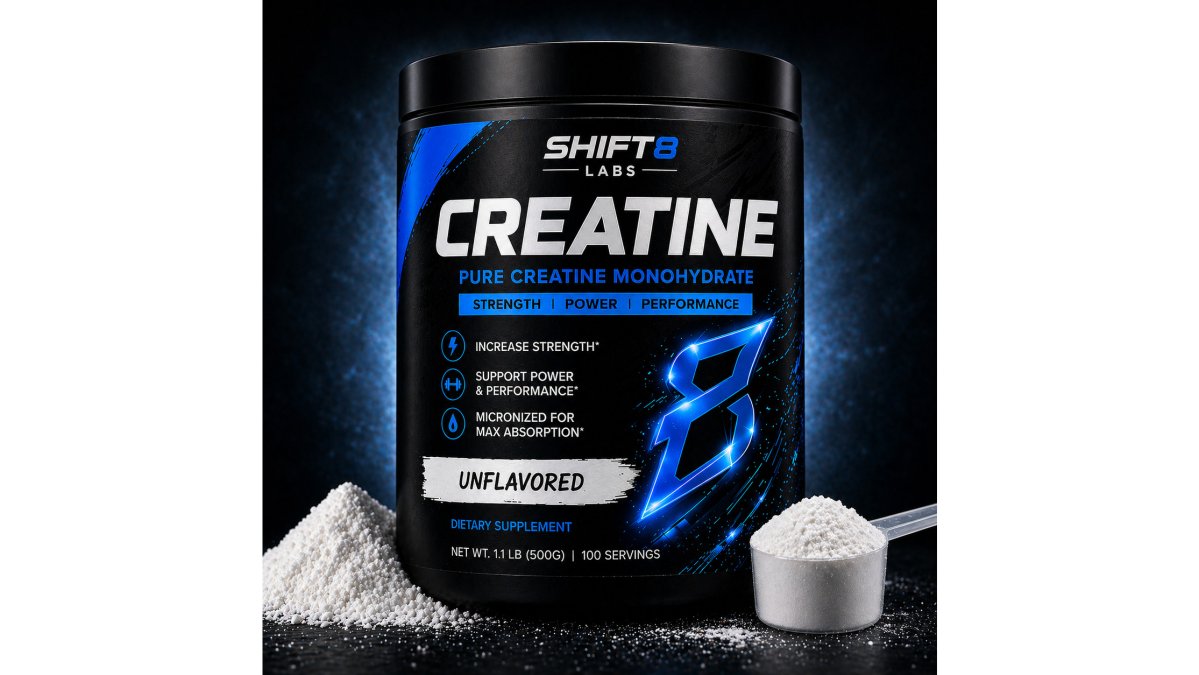
A minimalist supplement routine is a small, intentional set of supplements chosen for proven benefit, taken at effective doses, and repeated consistently. Most beginners need only three or four products to cover their bases: a protein source, creatine monohydrate, vitamin D, and an omega-3.

That's it. Everything else is optional until you have a specific reason to add it.
What to Ignore on the Shelf
Skip proprietary blends, fat burners, testosterone boosters, and anything promising rapid results without a clear ingredient list. A proprietary blend hides individual doses, which means you can't verify whether the active ingredients hit effective amounts. If a label won't tell you how much of each ingredient is inside, it isn't worth your money.
Essential Supplements for Muscle Growth That Actually Matter
Three supplements carry the strongest case for muscle growth: creatine monohydrate, protein powder, and vitamin D. Creatine supports strength and power output, protein supplies the amino acids needed for muscle protein synthesis, and vitamin D plays a role in bone health and muscular function.
Everything else, including BCAAs and most pre-workouts, sits firmly in the optional category.
NIH Office of Dietary Supplements fact sheets
| Supplement | Primary Role | Typical Dose | Priority |
|---|---|---|---|
| Creatine monohydrate | Strength and power | 5 g daily | High |
| Protein powder | Muscle recovery | 20-40 g as needed | High |
| Vitamin D | Bone and muscle function | 1,000-2,000 IU daily | Medium |
| Omega-3 | Joint and heart support | 1-2 g EPA/DHA | Medium |
| BCAAs | Marginal if protein is adequate | Varies | Low |
How to Choose Clean Supplements Without Getting Burned
Clean supplements are products with short ingredient lists, disclosed doses, and independent verification. The label tells you almost everything you need to know in under a minute, if you know where to look.
Look for third-party testing marks and a manufacturing facility that follows current Good Manufacturing Practices. The FDA's dietary supplement guidance explains that supplement makers are responsible for verifying safety and label accuracy before products reach shelves, which is why independent testing matters.
Reading a Label in 30 Seconds
- Check the serving size against the dose you actually need
- Confirm every active ingredient lists a specific amount
- Scan for fillers, artificial colors, and proprietary blends
- Look for a third-party testing seal
- Verify the ingredient form matches what research supports
Building a Supplement Routine for Recovery
Recovery is where a minimalist stack earns its keep, and the two levers that matter most are protein timing and creatine consistency. Everything else, tart cherry, collagen, glutamine, recovery powders, is optional until you have a specific reason to add it.
Protein: Total Daily Intake Beats the Anabolic Window
The old "30-minute anabolic window" advice has softened. Current sports-nutrition consensus, reflected in position stands from the American College of Sports Medicine and the International Society of Sports Nutrition, is that total daily protein intake matters more than precise post-workout timing. A common target is roughly 1.6 to 2.2 grams of protein per kilogram of body weight per day for people training for muscle or strength, spread across three to five meals.
That means a shake is a convenience tool, not a magic window. If you train fasted in the morning and your next meal is hours away, a 20-40 g whey or plant protein shake right after training is a practical way to hit your daily number. If you eat a solid meal within a couple of hours, the shake is optional.
- Whey concentrate or isolate: fast-digesting, high leucine, cheapest per gram of protein
- Casein: slower digesting, often used before bed
- Plant blends (pea + rice): comparable when combined for a complete amino acid profile
Creatine: Daily, Not Pre-Workout
Creatine monohydrate works by saturating muscle phosphocreatine stores, and saturation depends on total daily intake, not on when you take it. The standard maintenance dose is 3-5 g per day, every day, training or not. A loading phase of roughly 20 g per day split into four doses for 5-7 days saturates stores faster, but it is optional and often causes mild GI discomfort.
Timing around training is a minor variable at best. Pick a time you will not forget, with breakfast, with your post-workout shake, or with dinner, and stay there.
What Recovery Actually Rests On
No supplement out-recovers poor sleep, under-eating, or training through joint pain. Sleep duration and quality, total calories, protein intake, and deload weeks do the heavy lifting. Treat supplements as the last 5-10% of the recovery equation, not the foundation.
Interactions, Timing, and What Not to Stack
Most beginner stacks fail on timing confusion, not true ingredient conflicts, but real interactions do exist, and beginners are the least likely group to check for them. This is the section most supplement guides skip, and it is the one that matters most if you take prescription medication or manage a chronic condition.
Timing Rules That Actually Matter
- Fat-soluble vitamins (A, D, E, K): take with a meal containing fat. Absorption of vitamin D, for example, improves meaningfully when taken with a meal that includes some dietary fat.
- Creatine: any consistent time of day. Timing does not change outcomes.
- Stimulant pre-workouts: avoid within 6-8 hours of bedtime. Caffeine has a half-life of roughly 5 hours in most adults, longer in some.
- Iron and calcium: compete for absorption. Separate by at least two hours if you take both.
- Levothyroxine: calcium, iron, and magnesium can reduce absorption. A common clinical instruction is to take thyroid medication on an empty stomach and wait 4 hours before minerals.
Real Interactions Beginners Should Know
- Vitamin K and warfarin: vitamin K interferes with warfarin's anticoagulant effect. Anyone on warfarin should talk to their prescriber before adding a vitamin K-containing multivitamin or greens powder.
- St. John's wort: induces liver enzymes and can reduce the effectiveness of many prescription drugs, including some antidepressants, oral contraceptives, and immunosuppressants.
- High-dose vitamin E or fish oil with anticoagulants: may increase bleeding risk when combined with warfarin, apixaban, rivaroxaban, or daily aspirin.
- Calcium and certain antibiotics: tetracyclines and fluoroquinolones bind to calcium and can lose effectiveness. Separate doses by several hours.
- Potassium and ACE inhibitors or potassium-sparing diuretics: can push potassium too high.
- Grapefruit and certain supplements: affects the same CYP3A4 enzyme pathway as many medications.
How to Check Before You Add Anything
- List every supplement, dose, and frequency you currently take.
- List every prescription and over-the-counter medication you take.
- Cross-check using a reputable interaction database, the NIH Office of Dietary Supplements and MedlinePlus both publish free fact sheets and interaction tools.
- Ask your pharmacist. Pharmacists are the most accessible medication-interaction resource in the country and are trained specifically for this.
- If you are pregnant, breastfeeding, under 18, or managing kidney, liver, or heart disease, treat every new supplement as a conversation with your clinician first.
Dietary Restrictions and Supplement Forms
- Vegan: confirm vitamin D3 is from lichen, omega-3 is from algae, and capsules are not gelatin.
- Halal or kosher: look for certification marks on the label; gelatin capsules and some omega-3 sources are common issues.
- Gluten-free: most creatine monohydrate is naturally gluten-free, but flavored powders and blends may not be.
- Lactose intolerance: whey isolate is lower in lactose than concentrate; plant protein blends avoid it entirely.
NIH Office of Dietary Supplements, supplement fact sheets and interaction resources MedlinePlus drug and supplement interaction guide
Sticking With It: Budget, Tracking, and Consistency
A sustainable habit costs less than an ambitious one you quit. Pick two or three products, buy them in bulk sizes, and track whether you actually take them. A simple note on your phone works better than an app you'll forget to open.
Budget-conscious minimalism means spending on the basics first. A protein powder and a creatine tub cover the majority of what most beginners need. The Shift8 Labs chocolate protein and vanilla protein both come in 2 lb tubs built for daily post-workout use.

| Week | Focus | What to Track |
|---|---|---|
| 1-2 | Start creatine only | Daily dose taken |
| 3-4 | Add protein | Servings per day |
| 5-6 | Add vitamin D | With-food timing |
| 7+ | Review and adjust | Energy, recovery, sleep |
Building a minimalist supplement routine for beginners is less about finding the perfect product and more about choosing a few proven ingredients and repeating them long enough to see results. Shift8 Labs makes that easier with clean formulations, purposeful dosing, and no filler, so your stack stays small and your progress stays steady. Start with creatine and protein, add vitamin D and omega-3 when your budget allows, and get started with Shift8 Labs to support your performance and recovery from day one.
Frequently Asked Questions
What supplements should a beginner take?
Start with three: creatine monohydrate at 5 grams daily, a protein powder to close dietary intake gaps, and vitamin D if you get limited sun exposure. That trio covers the fundamentals of a minimalist supplement routine for beginners without overwhelming your budget or your shelf. Add omega-3 fatty acids or magnesium later if your diet or training demands it. Everything else can wait until these basics become a consistent habit.
How do I know if a supplement is high-quality and free of fillers?
Look for third-party testing and label transparency. A credible brand publishes certificates of analysis (COAs) from independent labs, lists every ingredient with exact amounts, and avoids proprietary blends that hide dosages. Check for third-party testing seals when available. If a label says 'proprietary blend' without numbers, treat it as a red flag. Clean supplements show you the math, not just the marketing.
Is it better to take fewer supplements consistently or many sporadically?
Fewer, consistently. A minimalist supplement routine works because it is sustainable. Taking five products randomly delivers less benefit than taking two or three every day for months. Consistency drives results in muscle recovery, strength, and overall performance. Pick a small stack you can afford and remember, set a daily trigger like your morning coffee or post-workout shake, and repeat it for at least eight weeks before judging results.
Can a minimalist supplement routine support muscle recovery and growth?
Yes. Muscle growth depends mostly on training, protein intake, sleep, and calories. A minimalist routine supports those pillars rather than replacing them. Creatine monohydrate at 5 grams daily supports strength and power output. Protein powder helps you hit daily protein targets for muscle protein synthesis. Adding BCAAs or EAAs around training can support recovery when whole-food intake falls short. Three to four targeted products cover what matters most for beginners.
What two supplements should not be taken together?
Calcium and iron compete for absorption, so taking high doses at the same time reduces how much iron your body uses. Separate them by at least two hours. Zinc and copper also compete, which is why quality multivitamins balance their ratios. Fat-soluble vitamins like A, D, E, and K need dietary fat to absorb properly, so take them with a meal. If you take prescription medication, check with your doctor before adding any supplement to your daily regimen.
How can I simplify my supplement routine without sacrificing results?
Cut anything you cannot explain in one sentence. Keep creatine, protein, and one recovery or micronutrient product that fits your actual gaps. Time them around existing habits: creatine with breakfast, protein post-workout, vitamin D with your largest meal. Buy in larger sizes to lower cost per serving, and track adherence in a notes app for the first month. Simplicity plus consistency beats a crowded stack every time.